Final expense insurance is a whole life policy with a small face amount that covers end-of-life costs: the funeral or cremation, outstanding medical bills, and small debts. It pays out in days, premiums never increase, and coverage never expires.
How final expense insurance works
Final expense insurance covers the costs your family faces in the weeks after a death. You choose a face amount — most policies range from $2,000 to $50,000 — and pay a fixed monthly premium. The premium locks in when you buy: it never rises with age or health changes. When you pass away, the policy pays out the full face amount in cash to the beneficiary you named.
Because the benefit is paid in cash, your family decides how to use it. Common uses include:
- Funeral, burial, or cremation costs
- Outstanding medical bills or hospice costs
- Credit card balances or small personal debts
- Travel costs for family attending the service
- Everyday bills while the estate is settled
What makes it different from other life insurance
| Feature | Final expense | Term life | Traditional whole life |
|---|---|---|---|
| Face amount | $2,000–$50,000 | $100,000+ | $50,000+ |
| Medical exam | No — health questions only (or none) | Usually required | Usually required |
| Coverage length | Lifetime | 10–30 years, then expires | Lifetime |
| Premiums | Locked in for life | Locked for the term | Locked in for life |
| Typical buyer | Ages 50–85 | Working-age families | Estate planners |
The trade-off is straightforward: final expense insurance offers smaller coverage amounts than term or traditional whole life, and in exchange it skips the medical exam, accepts most health histories, and never expires.
What final expense insurance costs
Premiums depend on your age, gender, health, tobacco use, and the face amount you choose. Coverage bought at 60 costs less than the same coverage bought at 75 — and the rate you start with is the rate you keep. For current figures by age band, see our final expense cost and rate tables.
Why families buy it
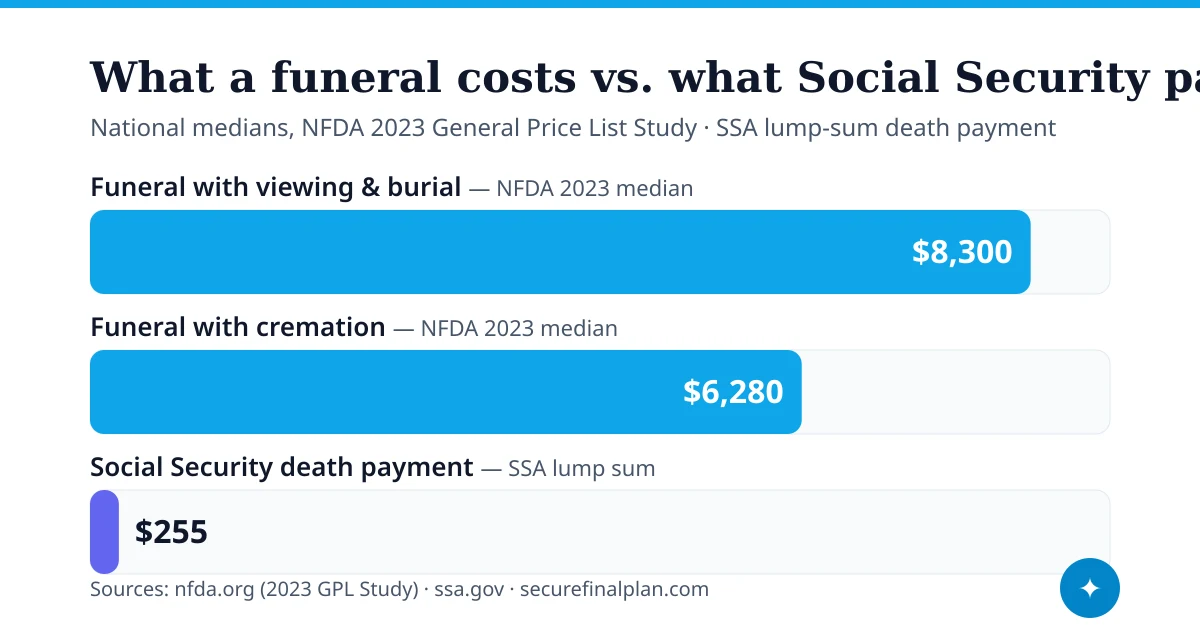
A funeral with viewing and burial carries a national median cost of $8,300 — $6,280 with cremation — according to the National Funeral Directors Association’s 2023 General Price List Study. Social Security, by contrast, pays a one-time lump-sum death payment of $255 to a qualifying survivor. Final expense insurance covers the gap so the cost doesn’t land on your children in the same week they lose you.
Who it fits — and who it doesn’t
Final expense insurance fits people aged 50–85 who want a manageable premium, guaranteed lifetime coverage, and a quick payout for their family. It is not the right tool for income replacement — a young parent protecting a mortgage and twenty years of earnings needs term life’s larger face amounts instead.